

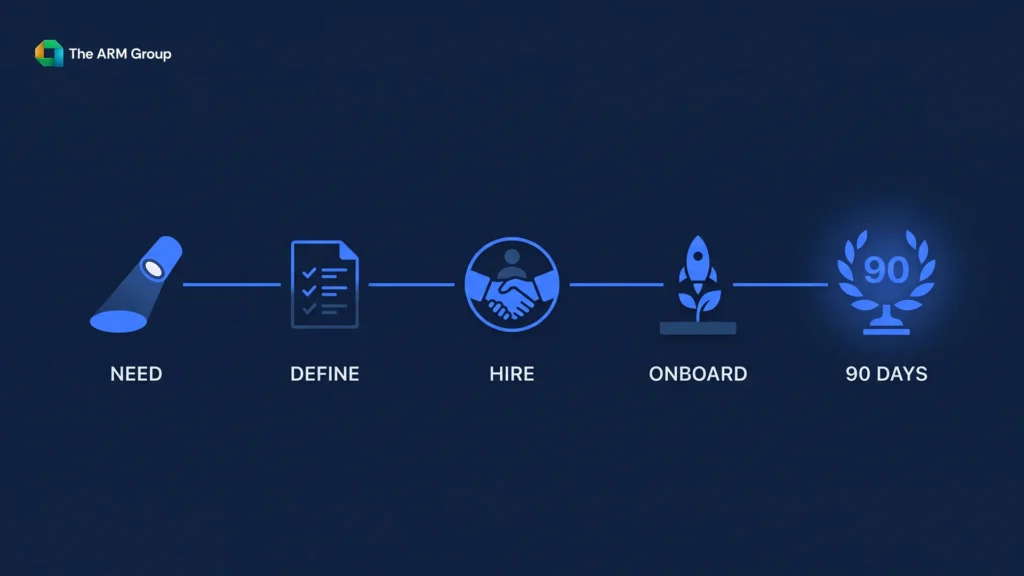
A vacancy does not automatically justify replacing the previous job. The recruitment process steps should move from validating the workforce need to defining success, sourcing, screening, interviewing, selecting, offering, preboarding, and onboarding. Each stage needs an owner, an output, and a decision gate so candidates do not wait while the employer reopens settled questions.
In July 2026, U.S. employers recorded 5.1 million hires while 7.3 million job openings remained at the end of the month. The scale of movement does not prove that every role is difficult to fill, but it shows why a controlled process matters.
Key Takeaways
- Validate the work and hiring model before approving a requisition.
- Convert the job description into a success profile with outcomes and job-related evidence.
- Set decision owners, interview stages, feedback deadlines, and offer authority before sourcing begins.
- Use the same essential criteria for applicants, referrals, and direct-sourced candidates.
- Treat offer acceptance, joining, and onboarding as separate stages with different failure risks.
What Should the Recruitment Process Accomplish?
A recruitment process should produce a person who can deliver defined outcomes under the real conditions of the role. Speed matters, but speed without clarity moves the wrong candidates faster.
Every stage should have four controls: an owner, required evidence, a time limit, and a pass-or-stop decision. A recruiter may own sourcing, while the hiring manager owns role outcomes and the final selection recommendation. HR or leadership may own compensation and approval.
The BLS JOLTS summary provides a current view of openings, hires, and separations across the U.S. economy. Employers should pair that market context with their own vacancy age, pipeline conversion, offer acceptance, and joining data.
Step 1: How Do You Validate the Workforce Need?
Confirm the work, duration, urgency, budget, and alternatives before opening a requisition. Ask whether demand is permanent, seasonal, project-based, replacement-driven, or tied to a new capability.
Consider redistributing work, developing an internal employee, redesigning the role, adding temporary capacity, or making a permanent hire. If demand is uncertain or time-bound, ARM Flexi may fit temporary, seasonal, contract, or hybrid requirements. If the capability is enduring, a permanent search may be more appropriate.
The output is an approved hiring decision with a target start date, workforce model, cost range, and accountable manager.
Step 2: How Do You Build the Hiring Brief?
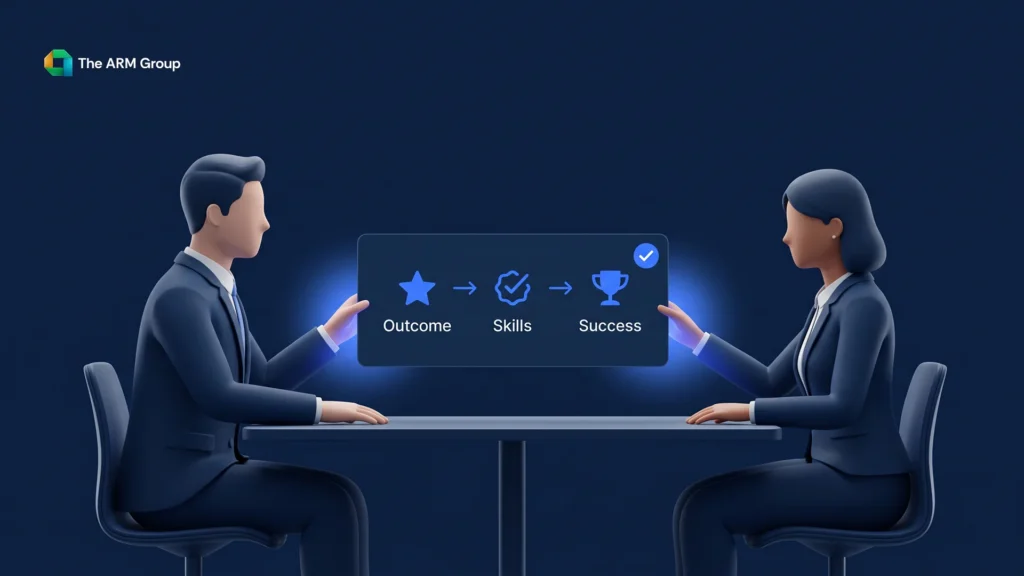
Define what success looks like before listing qualifications. The brief should include the business reason, first-year outcomes, responsibilities, essential and preferred skills, reporting line, location, work model, schedule, compensation guidance, interview stages, and joining timeline.
Remove inherited requirements that nobody can connect to the work. The EEOC’s employer best-practices guidance recommends analyzing job duties and competencies, then creating objective, job-related qualification standards.
For skilled permanent roles, ARM Professional begins with role understanding before targeted sourcing and screening.
Step 3: How Do You Choose Sourcing Channels?
Choose channels according to the talent market, not habit. Active candidates may respond to careers pages and job boards. Passive specialists may require direct search, referrals, communities, alumni, or a recruitment partner. Confidential leadership hiring may require ARM Elite executive search.
Create a channel plan with a target profile, message, owner, review date, and success measure. Do not launch every channel on day one. Test whether the brief, compensation, location, and work model are credible before scaling outreach.
The output is a live candidate pipeline with source, contact status, interest, essential-fit evidence, availability, and constraints.
Step 4: How Do You Screen Candidates Consistently?
Use the same essential criteria and evidence standard for every source. A structured screen should cover relevant work, capability evidence, motivation, location, availability, compensation alignment, and material role conditions.
The EEOC’s guidance on employment tests and selection procedures explains that cognitive, personality, medical, credit, and other selection procedures must comply with federal anti-discrimination requirements. Employers should review assessments and background checks with qualified advisers for the applicable role and jurisdiction.
Record the reason for progression or rejection. That discipline improves handoffs, supports consistency, and reveals when the market disagrees with the original brief.
Step 5: How Do You Structure Interviews and Selection?
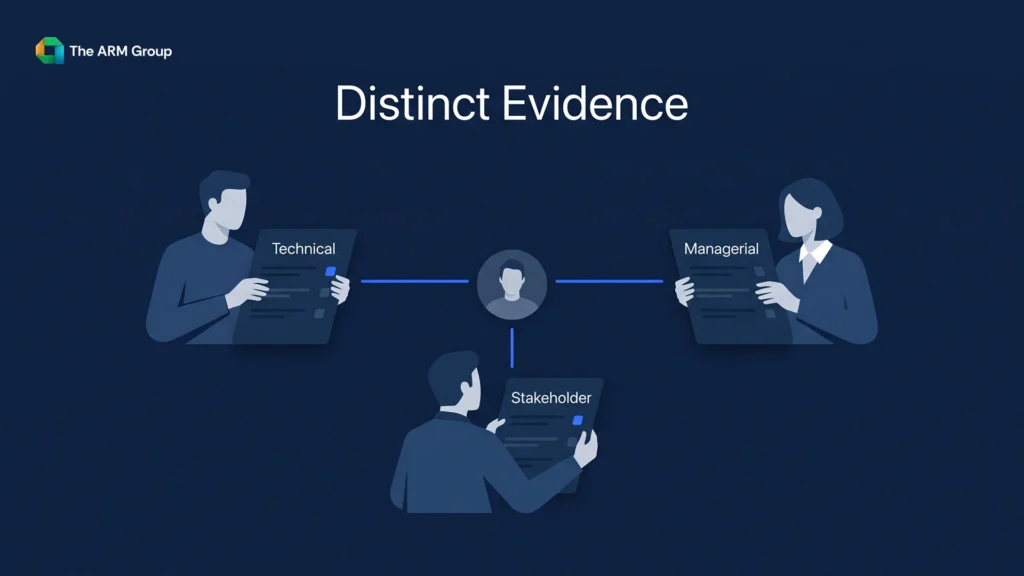
Assign each interviewer a defined question area and scoring standard. Repeated conversational interviews waste candidate time and produce overlapping opinions.
| Stage | Evidence Required | Decision Owner | Common Failure |
| Recruiter screen | Essential fit, motivation, availability, constraints | Recruiter | Advancing on keywords alone |
| Hiring-manager interview | Role outcomes and relevant work evidence | Hiring manager | Changing requirements mid-search |
| Technical or work sample | Job-related capability | Qualified assessor | Testing trivia unrelated to performance |
| Stakeholder interview | Collaboration and operating context | Named stakeholder | Repeating earlier questions |
| Final decision | Consolidated evidence against the agreed criteria | Hiring manager or panel lead | Choosing by unstructured preference |
Collect feedback independently before the panel discussion. Set a deadline, resolve evidence gaps, and document the final reason.
Step 6: How Do You Manage the Offer and Preboarding?
Confirm expectations before issuing the written offer. Recheck compensation, location, schedule, travel, start date, reporting line, and any contingencies. Identify the person authorized to approve changes.
Keep communication active between acceptance and joining. Long notice periods, counteroffers, paperwork, relocation, and delayed checks can change candidate intent. A signed offer is not a joined employee.
For U.S. hires, employers must complete and retain Form I-9 for each covered employee. Immigration, tax, employment, and data requirements vary by jurisdiction, so confirm the applicable process with qualified advisers.
Step 7: How Do You Complete Onboarding and Review the Hire?
Onboarding should connect the promise made during recruitment with the employee’s first weeks of work. Prepare access, equipment, schedule, manager time, training, goals, and a team welcome before the start date.
Use 30-day, 60-day, and 90-day checkpoints to review role clarity, training, manager contact, workload, early performance evidence, and concerns. Feed what you learn back into the brief and screening criteria.
Candidate rejection can also reveal process problems. Review The ARM Group’s guide to why strong candidates say no when offers or interviews repeatedly lose qualified people.
Which Metrics Reveal Recruitment Process Problems?
Measure conversion and delay at each stage. Track approved-to-open time, source-to-screen conversion, screen-to-interview conversion, interview-to-offer conversion, offer acceptance, acceptance-to-joining, time in stage, candidate withdrawal, new-hire retention, and hiring-manager response time.
Segment the results by role, location, seniority, hiring manager, and source. A slow overall time-to-hire does not tell you whether the delay sits in approval, sourcing, interview scheduling, feedback, or the offer.
Talk to The ARM Group about structuring a recruitment process for your roles, locations, hiring volume, and target start dates.
FAQs
What Are the Main Recruitment Process Steps?
The main steps are workforce-need validation, hiring-brief development, sourcing, screening, interviewing, selection, offer, preboarding, and onboarding. Employers may combine stages, but each decision still needs evidence and ownership.
How Long Does the Recruitment Process Take?
The timeline depends on role scarcity, location, seniority, assessment stages, compensation, decision speed, notice period, and onboarding requirements. Build a role-specific schedule instead of relying on one company-wide average.
Who Owns the Recruitment Process?
Ownership is shared, but the hiring manager owns the role outcome and final selection recommendation. Recruiters own process coordination and market activity, while HR, finance, or leadership may own policy and approval.
What Comes Before Candidate Sourcing?
Validate the workforce need and complete the hiring brief before sourcing. Otherwise, candidates enter a process whose role, budget, or decision criteria may still change.
How Many Interview Stages Should a Company Use?
Use the fewest stages needed to collect distinct, job-related evidence. Remove interviews that repeat questions or lack a defined decision purpose.
What Is the Difference Between Recruitment and Selection?
Recruitment creates and manages the candidate pipeline, while selection evaluates evidence and chooses whom to hire. Both depend on a clear, job-related standard.
Does the Recruitment Process End at Offer Acceptance?
No. Preboarding, joining, onboarding, and early feedback determine whether the accepted candidate becomes a productive and retained employee.
When Should an Employer Use a Recruitment Agency?
An agency is useful when hiring needs specialist market access, passive-candidate outreach, confidentiality, multiple locations, higher volume, or more coordination than the internal team can support. The employer should still own the final decision.
Conclusion
Validate the workforce need, define success, choose channels, screen consistently, collect structured evidence, and prepare the offer before urgency takes control. Then manage joining and use onboarding feedback to improve the next search. Professional recruitment support becomes useful when the market, volume, confidentiality, or timeline demands more reach and coordination.