


It is Friday, 4:47 p.m. Your VP of Operations just resigned. By Monday someone will ask, “Who do we know?” and the room will go quiet.
Talent mapping is how you make sure that room never goes quiet. It means charting the people, skills, and companies in your market before a role opens, so you hire from a list instead of a panic. SHRM’s 2026 data puts the median executive time-to-fill at 45 days. A good map takes the hardest part of that wait off the table.
TL;DR
- Talent mapping is the practice of researching who could fill your future roles, where they work, and what would make them move.
- It starts 6 to 12 months before a role opens, not on the day someone resigns.
- It differs from succession planning because it looks outside your company as well as inside.
- A useful map holds names, notes, pay ranges, and a refresh date, not just a spreadsheet of titles.
- The biggest failure is a map built once and never updated.
What’s in This Guide
- What Is Talent Mapping in Recruitment?
- How Is Talent Mapping Different From Succession Planning and Talent Pools?
- Why Does Talent Mapping Matter Before a Role Opens?
- How Do You Build a Talent Map Step by Step?
- Which Industries Need a Talent Map Most?
- What Mistakes Make a Talent Map Useless?
- How The ARM Group Turns Talent Mapping Into Hires
- Frequently Asked Questions
- Key Takeaways
What Is Talent Mapping in Recruitment?
Talent mapping is the process of researching and organizing the people, skills, employers, and salary ranges in your market so you know who could fill future roles. It answers one question early: if this seat opened tomorrow, who would we call?
Talent mapping recruitment works backward from your business plan. You list the roles you will likely need in the next 6 to 12 months, then chart where those people work today, what they earn, and what would make them listen.
Think of it as a weather forecast for hiring. You cannot stop the storm. You can decide whether you are holding an umbrella.
How Is Talent Mapping Different From Succession Planning and Talent Pools?
Most companies already have one or two of these tools. Few have all four working together.
| Approach | What It Looks At | Who It Covers | Best For |
| Talent mapping | Your external and internal market | People you may never have met | Future and hard-to-fill roles |
| Succession planning | Your current staff | Employees you already know | Replacing known leaders |
| Talent pool | Past applicants and contacts | People who already know you | Fast, repeat hiring |
| Talent pipeline | Active conversations | Warm, engaged candidates | Open or near-term roles |
Succession planning has a blind spot. It assumes your best internal candidate is ready, and it says nothing about the day they are not. Talent mapping recruitment fills that gap by looking outside, then feeding the best names into your pipeline.
Why Does Talent Mapping Matter Before a Role Opens?
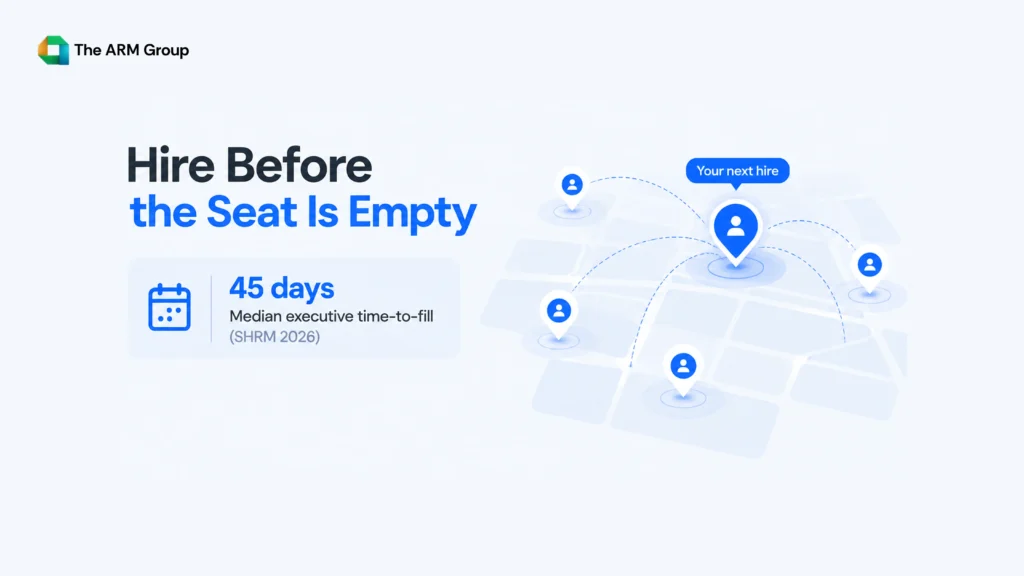
Because the clock starts at resignation, not at the job posting. SHRM’s 2026 recruiting benchmarking shows a median time-to-fill of 39 days for nonexecutive roles and 45 days for executive roles. Every one of those days is spent without the person you need.
Picture a regional logistics operator whose operations head resigns before peak season. Without talent mapping, the team starts from zero: a job post, a pile of résumés, and weeks of cold outreach. With a map, they open a ranked list of eight people, with notes on who is open to a conversation and what each would expect to be paid.
Timing matters in the wider market too. The Bureau of Labor Statistics tracks openings and hires every month through its JOLTS survey. When openings stay high, strong candidates field several calls a week, and the company that calls first often wins.
Talent mapping recruitment gives you that first call. It turns hiring from a reaction into a head start.
How Do You Build a Talent Map Step by Step?
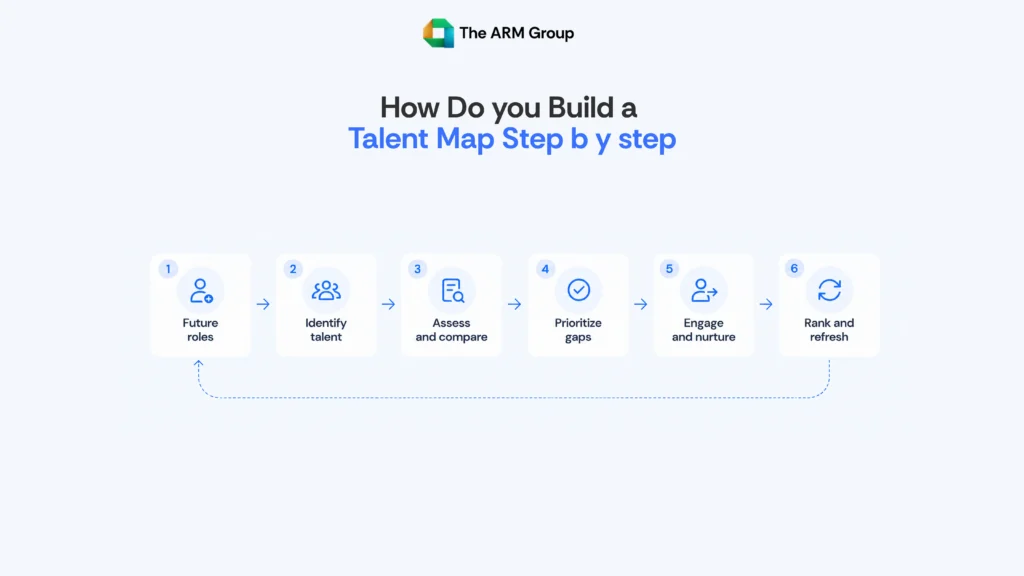
You do not need software to begin. You need discipline and a clear owner.
- List your future roles. Use your 6 to 12 month plan. Start with leadership roles, hard-to-fill technical roles, and roles with long notice periods.
- Define the profile. Separate must-have skills from nice-to-haves. Be specific about industry experience, certifications, and location.
- Chart target employers. Include direct competitors, adjacent industries, and companies that recently downsized or restructured.
- Identify real people. Use research, referrals, and your network. Record their current role, location, and a rough sense of tenure.
- Add market data. Note typical salary ranges, relocation appetite, and how many qualified people exist in each city. Public sources like the BLS employment projections show which occupations are growing.
- Rank and refresh. Sort people into three tiers: ready to talk, worth watching, and long-term. Review the map every quarter.
For leadership roles, pair the map with a clear search process, like the one in our guide to recruiting C-level executives.
Which Industries Need a Talent Map Most?
Any industry with a small candidate pool or long notice periods. Three stand out:
- Pharma and medical devices: regulatory, quality, and clinical roles need specific credentials, so the pool is narrow. A map built around pharmaceutical and medical devices hiring needs shows who holds them before you need them.
- Logistics and transportation: peak seasons are fixed on the calendar, so you can plan operations and fleet leadership months in advance. See how logistics and transportation hiring works when timing is tight.
- Banking captives (GCCs and GICs): senior talent clusters in a handful of cities, and everyone is fishing in the same pond. Banking captives hiring rewards the team that already knows the pond.
What Mistakes Make a Talent Map Useless?
Most maps fail quietly. Nobody notices until the day they are needed.
- The Dusty Spreadsheet. Built once, never touched again. People change jobs, and a stale map sends you to people who left months ago.
- Mapping only job seekers. The strongest candidates are usually employed and not looking. A map of active applicants is just a longer inbox.
- Names without notes. A list of titles is not a map. Without context on motivation, pay, and timing, you still start from a cold start.
- No owner. If everyone is responsible, no one updates it.
A talent map is a living document. Treat it like a garden, not a trophy.
How The ARM Group Turns Talent Mapping Into Hires
A talent map only pays off when someone can act on it, and that is where The ARM Group comes in. Brief our recruiters on the roles you expect over the next 6 to 12 months, and we will build shortlists based on a defined market view rather than a cold search. That is talent-mapping recruitment in practice: when a role opens, pre-vetted candidates reach you within 24 to 48 hours.
ARM Elite applies this to C-suite, VP, and Director searches, where the pool is small and confidential outreach matters. ARM Professional covers growing teams and functional roles from intake to offer, including salary alignment. ARM Flexi handles contract and volume needs, so when a mapped role is urgent you can bring in interim talent while the permanent hire serves notice.
There is no commitment to start and no long-term lock-in. With India-based leadership and US execution, one team plans the map while another keeps searches moving across time zones.
Want a map for your next 6 to 12 months of hiring? Click here to get a quote.
Talent mapping does not stop resignations. It changes what happens on Monday morning. Instead of a quiet room, you have a ranked list, a few warm conversations, and a plan. The companies that hire well are rarely the ones that move fastest once a seat is empty. They are the ones who started before it was.
Frequently Asked Questions
What is talent mapping in recruitment?
It is the process of researching and organizing the people, employers, skills, and pay ranges in your market so you can fill future roles faster. A talent map tells you who could do the job before the job opens.
How is talent mapping recruitment different from sourcing?
Sourcing finds candidates for a role that is open now. Talent mapping recruitment looks ahead, building a ranked view of the market 6 to 12 months early. Sourcing reacts to a vacancy. Mapping prepares for it.
How often should you update a talent map?
Review it every quarter at minimum. People change jobs, salaries shift, and new companies enter your market. For fast-moving sectors like IT or leadership search, a monthly check on top-tier names keeps the map useful.
Which roles should you map first?
Start with roles that are hard to fill, business-critical, or tied to long notice periods. Leadership, regulatory, quality, and specialist technical roles usually top the list.
Is talent mapping only for large companies?
No. A 50-person company can map five key roles in a spreadsheet and gain the same head start. Scale changes the tool, not the logic.
Can a recruitment agency build a talent map for you?
Yes. An agency with an active candidate network can research your market, rank names, and keep the map current. Your team still needs to share its hiring plan, so the research matches real future roles.
Key Takeaways
- Talent mapping charts the people, employers, and pay ranges in your market before a role opens, so hiring starts with a list.
- SHRM’s 2026 medians of 39 and 45 days show how long an unprepared search can take.
- Succession planning looks inward, while a talent map looks both inside and outside your company.
- Start with leadership, hard-to-fill technical roles, and any role with a long notice period.
- Build the map from your 6 to 12 month plan, not from last quarter’s vacancies.
- A useful map records names, motivations, pay ranges, and timing, not just job titles.
- Passive candidates are usually your best hires, so mapping only active job seekers misses most of the market.
- Review the map every quarter, because a stale list sends you to people who already moved on.
- Talent mapping recruitment works best when one named person owns the map and keeps it current.
- Pharma, logistics, and banking captives gain the most because their candidate pools are small and competitive.
Ready to hire before the role opens? Talk to a real recruiter. Call us on +1 803-830-7396 (US) or +91 96630-35271 (India).