


High turnover is rarely fixed by adding another perk. Effective employee retention strategies identify where people leave, which groups are most exposed, and which operating conditions managers can change. Start with role-level data, manager conversations, workload, pay position, growth paths, and the first 90 days of employment. Then assign owners and review progress every month.
The need is measurable. The U.S. Bureau of Labor Statistics reported 3.1 million quits in July 2026, with a national quits rate of 1.9 percent. A high-turnover team should compare its own patterns by manager, role, shift, tenure, and location rather than treating every exit as the same problem.
Key Takeaways:
- Diagnose turnover by role, manager, shift, location, and tenure before choosing a retention program.
- Separate regrettable voluntary turnover from planned exits, dismissals, retirements, and internal transfers.
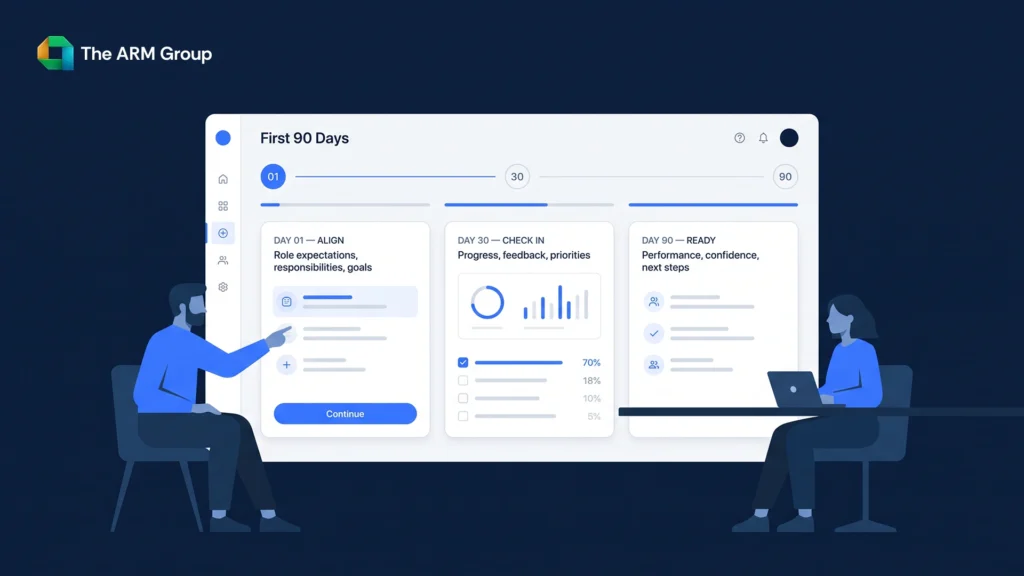
- Focus the first 90 days on role clarity, manager contact, training completion, workload, and early warning signs.
- Track leading indicators monthly, including new-hire exits, internal moves, absence, overtime, engagement follow-through, and offer declines.
- Use permanent, temporary, and contract staffing selectively so workload spikes do not become a recurring reason to leave.
Why Do High-Turnover Teams Need a Different Retention Plan?
High-turnover teams need targeted fixes because the same organization can contain very different exit patterns. A warehouse night shift may lose people because schedules change without notice. A software team may lose specialists because promotion paths are unclear. A sales team may have a manager-specific problem hidden inside a healthy company-wide average.
The latest BLS Job Openings and Labor Turnover Survey separates quits from layoffs and other departures. Employers should use the same discipline internally. A resignation by a six-month employee, a retirement, and a transfer are not one retention problem.
Begin with a twelve-month view, then segment it. Look for concentrations around one manager, one tenure band, a particular shift, a recent policy change, or a repeated role. That pattern tells you where to interview, observe, and intervene first.

How Do You Diagnose the Real Cause of Turnover?
Use multiple signals, because exit interviews alone arrive late and often soften the real reason. Combine HR data with short stay interviews, manager one-to-ones, absence patterns, overtime, internal applications, pay-range position, promotion history, and rejected offers.
Use a simple diagnostic table:
| Signal | What It May Reveal | First Check |
| Exits in the first 90 days | Job preview, onboarding, supervisor, or schedule mismatch | Compare the promise made during hiring with the actual first month |
| Turnover concentrated under one manager | Work allocation, feedback, fairness, or conduct issue | Review team data and speak privately with current employees |
| Strong performers leaving after two years | Pay compression or blocked growth | Compare progression, pay position, and internal mobility |
| Higher exits on one shift | Scheduling, transport, workload, or supervisor issue | Observe the shift and compare absence and overtime |
| More resignations after peak periods | Sustained overload after temporary demand | Review staffing mix and recovery time |
Gallup’s employee retention and attraction indicator reports that engagement and culture, plus wellbeing and work-life balance, accounted for 68 percent of the reasons employees gave for leaving in 2024. Treat that as a research signal, then test it against your own workforce.
Which Employee Retention Strategies Work Best?
The best strategy is the one tied to a verified cause, a named owner, and a measurable operating change. For high-turnover teams, six actions usually deserve priority.
- Reset role expectations. Show candidates and new hires the real schedule, workload, worksite, performance standard, and progression path.
- Improve manager routines. Require predictable one-to-ones, timely feedback, workload reviews, and documented follow-through.
- Correct avoidable pay issues. Review market position, internal equity, shift differentials, overtime dependency, and pay compression.
- Make growth visible. Publish the skills, performance evidence, and openings needed for the next move.
- Repair workload design. Add capacity, redistribute work, simplify low-value tasks, or use flexible staffing during peaks.
- Close the feedback loop. Tell employees what was heard, what will change, who owns it, and when they will see progress.
Gallup’s current employee engagement guidance emphasizes purpose, development, supportive managers, ongoing conversations, and the opportunity to use strengths. Those ideas become useful only when translated into team-level routines.
What Does a 90-Day Retention Plan Look Like?
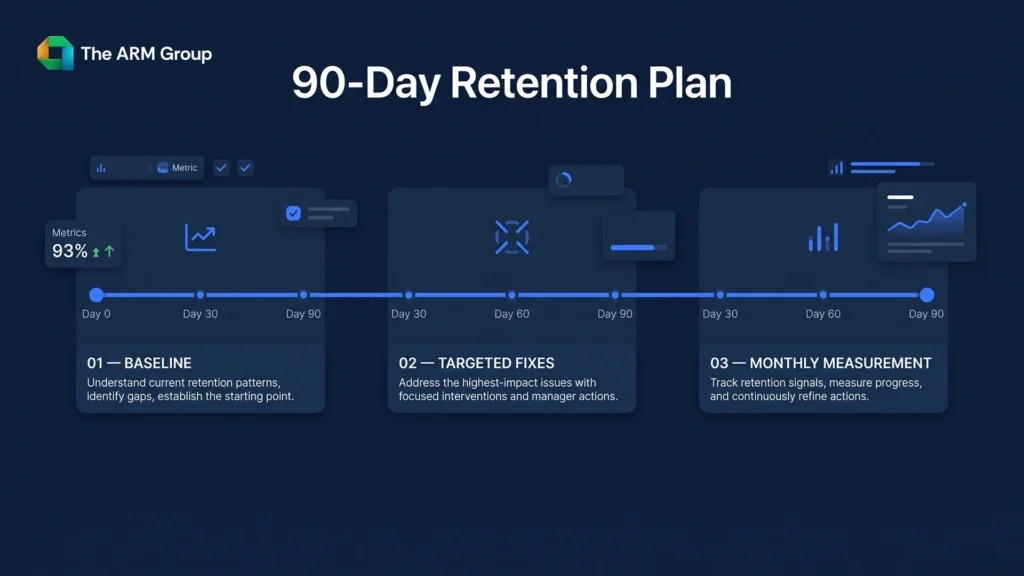
A practical 90-day plan moves from diagnosis to a small number of controlled changes. Avoid launching ten programs at once, because you will not know which action changed the result.
Days 1 to 30: Establish the Baseline
Calculate voluntary turnover by role, manager, shift, location, and tenure. Review new-hire exits, absence, overtime, internal applications, promotion rates, and employee comments. Interview a representative sample of current employees, not only leavers.
Days 31 to 60: Fix the Highest-Risk Moment
Choose one or two patterns with the clearest evidence. Examples include inaccurate job previews, delayed training, unstable schedules, manager follow-up, or blocked internal moves. Assign an executive sponsor and an operational owner.
Days 61 to 90: Measure and Adjust
Compare the affected group with its baseline. Review leading indicators before waiting for annual turnover. If workload is the issue, ARM Flexi workforce solutions can help employers consider temporary, seasonal, contract, or hybrid staffing around demand.
Which Retention Metrics Should You Track?
Track outcome metrics and early warnings together. Turnover is a lagging measure. By the time it rises, the underlying problem may have existed for months.
At minimum, monitor voluntary turnover, regrettable turnover, 30-day and 90-day exits, internal mobility, absence, overtime, vacancy age, manager one-to-one completion, training completion, offer acceptance, and stay-interview themes. Review each measure by meaningful workforce segment.
Use a rolling twelve-month rate for trend stability and a monthly cohort view for quick detection. Do not publish a single retention score without defining the denominator and departure types. The BLS JOLTS technical note shows why definitions matter when rates are compared over time.
How Do Recruitment Decisions Affect Employee Retention?
Retention begins before the offer, because mismatched expectations create preventable early exits. The hiring brief should describe outcomes, working conditions, manager expectations, schedule, location, compensation range, and realistic growth opportunities.
Structured screening should test evidence relevant to the role. The U.S. Equal Employment Opportunity Commission advises employers to use neutral, objective, job-related criteria and apply standards consistently in recruitment and promotion. Review the EEOC’s employer guidance with qualified counsel for your circumstances.
For skilled permanent roles, ARM Professional supports requirement definition, targeted sourcing, screening, interview coordination, and onboarding guidance. Employers comparing workforce models can also review direct hire versus temporary hiring.
What Retention Mistakes Keep Repeating?
The most damaging mistake is solving the visible symptom without changing the system that creates it. Counteroffers may delay an exit but do not repair poor supervision, workload, or weak progression. Engagement surveys create frustration if leaders collect answers without acting. Company-wide perks miss problems concentrated in one team.
Other frequent failures include measuring all turnover as bad, waiting for annual surveys, treating manager capability as an HR-only issue, hiding pay ranges, and relying on replacement hiring to absorb avoidable churn. Recruitment can refill seats, but it cannot compensate for an unchanged work environment.
Talk to The ARM Group about the recruitment model that fits your workload, skill needs, and retention risk.
FAQs
What Is Employee Retention?
Employee retention is an organization’s ability to keep the people it needs over a defined period. Useful analysis distinguishes voluntary, involuntary, regrettable, and planned departures.
What Is a Good Employee Retention Rate?
A good rate depends on the industry, role, labor market, workforce model, and calculation method. Compare your rate with its own trend and with similar roles before using a broad benchmark.
Why Do Employees Leave High-Turnover Teams?
Employees often leave because of a combination of management, workload, pay, growth, schedule, culture, or expectation mismatch. Segmenting exit data helps identify which cause is strongest in each team.
How Can Managers Improve Retention?
Managers can improve retention through clear expectations, regular feedback, fair work allocation, recognition, development conversations, and timely action on concerns. Their routines should be measured, coached, and supported.
When Should Stay Interviews Happen?
Stay interviews should happen before resignation risk becomes visible. Many employers schedule them after onboarding, at key tenure points, after manager changes, and during periods of heavy demand.
Do Pay Raises Improve Employee Retention?
Pay corrections can improve retention when compensation is inequitable or below the relevant market, but pay alone will not fix poor management or unsustainable work. Review pay alongside workload, progression, and working conditions.
Can Flexible Staffing Reduce Turnover?
Flexible staffing can reduce pressure when temporary demand would otherwise create chronic overtime or overload. It works best when role expectations, onboarding, supervision, and assignment duration are clear.
How Long Does a Retention Strategy Take to Work?
Leading indicators can move within weeks, while turnover trends usually need several months of consistent observation. Set 30-day, 60-day, and 90-day checks, then continue monthly review.
Conclusion
Start with the turnover pattern, not a list of perks. Identify the team and moment where exits concentrate, choose one or two operating changes, assign an owner, and monitor early signals monthly. Recruitment support becomes useful when workload, skill shortages, or recurring vacancies exceed the internal team’s capacity.

Kiran Kumar Naik
Kirankumar Naik is a Client Partner (Business Development Manager) at The ARM Group, where he helps product- and service-based companies scale their teams by connecting them with the right talent. His expertise spans lead generation, marketing, and sales, and he thrives on building long-term partnerships that drive business growth. Focused on deeply understanding client needs, Kirankumar delivers solutions that make a real impact — turning complex hiring challenges into win-win outcomes for clients and candidates alike, across leadership, lateral, and contract hiring worldwide.