
Your top performer resigns on Monday. You open a requisition on Tuesday. Weeks later, you’re still interviewing, and the project she led is quietly slipping.
The painful part? You saw it coming. You just didn’t have a plan.
The main workforce planning benefits are fewer hiring gaps, faster fills, steadier budgets, and less panic hiring. These workforce planning benefits come from knowing which roles you’ll need, and when, before the vacancy exists. Here’s how to get them.
TL;DR
- The biggest workforce planning benefits are fewer gaps, faster hiring, and predictable costs.
- Workforce planning compares the people and skills you have with the ones your business needs next.
- Avoid the Backfill-Only mistake: replacing roles without asking if they still fit.
- Different roles need different hiring models: permanent, contract, or flexible.
- You can start small, with one team and one 12-month forecast.
Table of Contents
- What Are the Workforce Planning Benefits for Employers?
- Which Workforce Planning Benefits Matter Most?
- How Does Planning Reduce Future Hiring Gaps?
- How Do Workforce Planning Benefits Show Up in Real Hiring?
- Why Is Planning More Urgent Now?
- How Do You Start Capturing Workforce Planning Benefits?
- Why Is The ARM Group the Right Partner for Turning Plans Into Hires?
- Where Should You Start?
- Frequently Asked Questions
- Key Takeaways
What Are the Workforce Planning Benefits for Employers?
Workforce planning is simple at heart. Next, list the people and skills your business needs, compare them with what you have today, and decide how to close the gap.
SHRM describes the typical process as starting with business strategy, then finding pipeline gaps and deciding how to fill them. Business goals first. Hiring second.
Think of a weather forecast. You can’t stop the rain, but you can carry an umbrella. The benefits of workforce planning are exactly that: you can’t stop resignations, but you can stop being soaked by them.
Which Workforce Planning Benefits Matter Most?
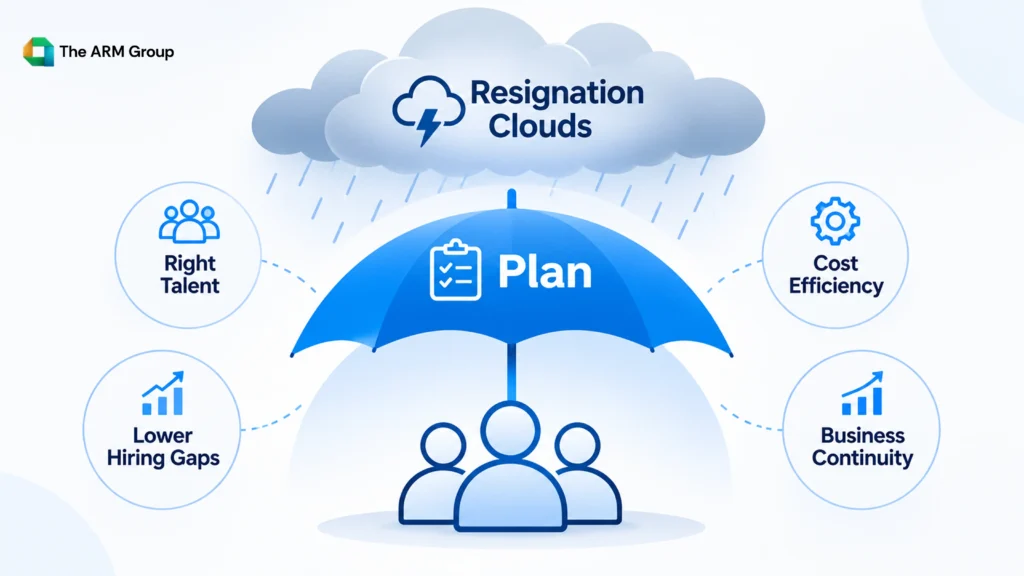
Here are the five that hiring teams tend to feel first.
| Benefit | What Changes | What It Looks Like |
| Fewer hiring gaps | You spot shortages early | Searches start before the vacancy |
| Faster fills | Candidates are already in conversation | Shorter time from need to offer |
| Steadier budgets | Hiring costs are forecast, not a surprise | Fewer emergency, premium-rate hires |
| Smarter hiring models | Each role gets the right model | Permanent, contract, or flexible by design |
| Less panic hiring | Decisions are calm and deliberate | Fewer rushed offers and mismatches |
How Does Planning Reduce Future Hiring Gaps?
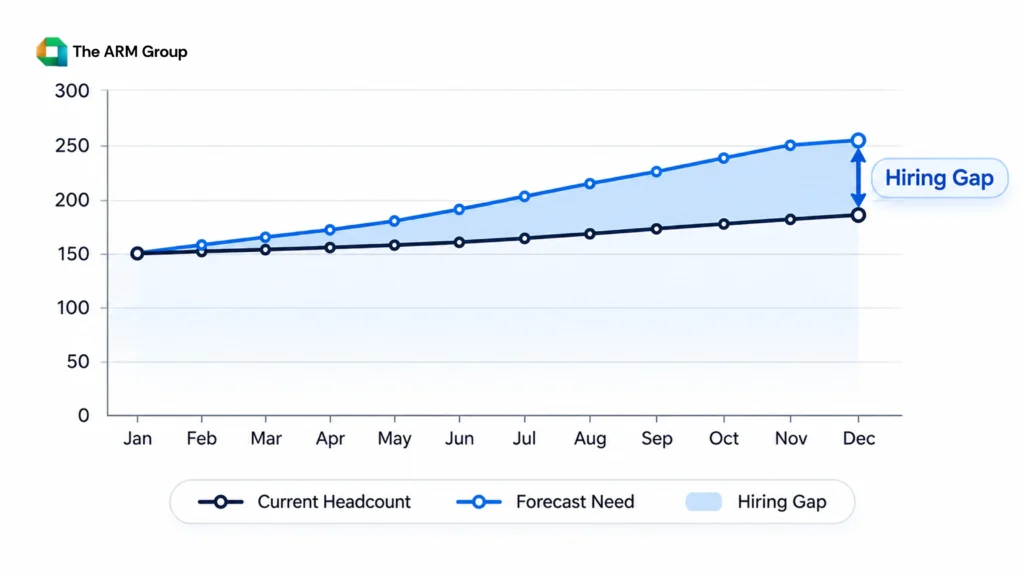
Three moves do most of the work.
- Forecast demand. Which roles will your business need in the next 12 months?
- Map supply. Who’s staying, who’s retiring, who’s likely to leave, and who can grow into a bigger role?
- Close the gap early. Start searches, upskilling, or contract cover before the gap opens.
Now the named mistake: the Backfill-Only mistake. Someone leaves, so you rush to replace the exact same role. Nobody asks whether the role still fits the business, or whether the skills have shifted.
The fix is one question in every exit conversation: “If this seat were empty today, would we hire the same job again?” Sometimes the answer saves you a hire. Sometimes it changes the whole job description.
How Do Workforce Planning Benefits Show Up in Real Hiring?
The benefits look different in every industry. Here are three illustrative examples.
- Energy and power: Technical roles take time to fill, so early forecasting means the search starts months ahead. See energy and power hiring solutions.
- Aviation and aerospace: Specialist skills are scarce, so a talent pipeline beats a last-minute scramble. See aviation and aerospace hiring solutions.
- Retail and e-commerce: Demand spikes seasonally, so flexible cover can be planned instead of begged for. See retail and e-commerce hiring solutions.
The workforce planning benefits are the same everywhere. What changes is the calendar.
Why Is Planning More Urgent Now?
Because the market won’t hand you talent. The U.S. Bureau of Labor Statistics projects total employment to grow just 3.1 percent from 2024 to 2034, adding 5.2 million jobs. Steady, modest growth is not a flood of new candidates.
Leaders already know it. SHRM cites a 2023 Fast Company survey in which 61 percent of board directors rated planning as a very or extremely important talent issue.
How Do You Start Capturing Workforce Planning Benefits?
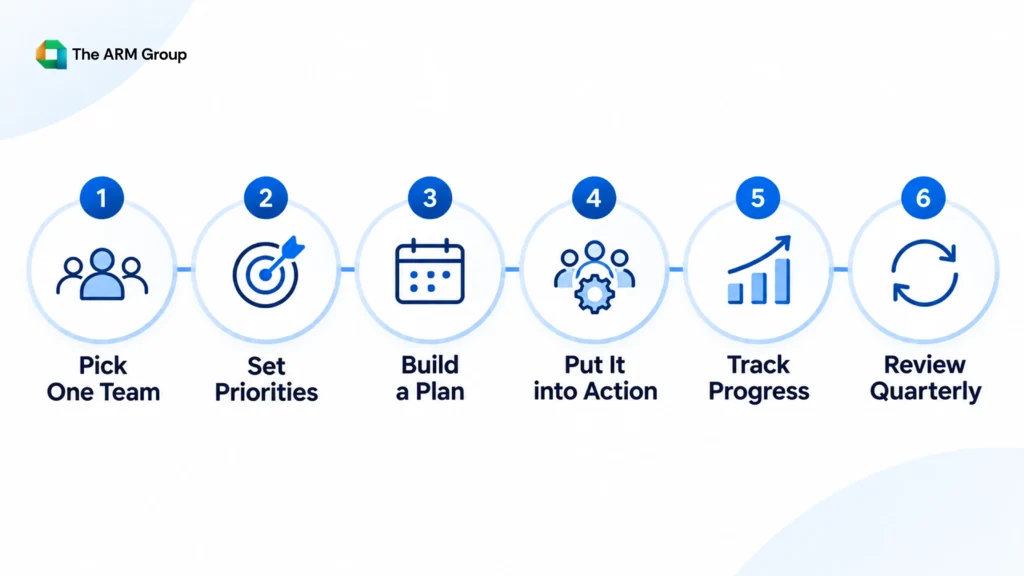
Grab a spreadsheet and a coffee. Then:
- Pick one team. Don’t boil the ocean.
- List current roles and skills. Who does what, and who’s critical?
- Forecast the next 12 months. Growth, exits, new projects.
- Mark the gaps. Roles and skills you’ll be short of.
- Choose a hiring model per gap. Permanent, contract, or flexible.
- Review quarterly. The business changes, so the plan should too.
You’ll feel the first workforce planning benefits within a single quarter, because the first gap you catch early is the first emergency you avoid.
Why Is The ARM Group the Right Partner for Turning Plans Into Hires?
A plan without recruiters is a wish list. The ARM Group turns forecasted gaps into filled roles, with real recruiters, pre-vetted shortlists in 24 to 48 hours, and no commitment to start. That’s how the workforce planning benefits actually land on your org chart.
Each service fits a different gap. ARM Elite runs leadership searches for succession risks at C-suite, VP, and Director level. ARM Professional covers mid-to-senior hiring for the functional roles your forecast flags. ARM Flexi scales contract and volume cover up or down for seasonal peaks. When a gap has already opened, Hybrid Direct Placement pairs targeted sourcing with screening to fill it faster.
An Indian company expanding into the US can bring us its forecast and get full-cycle recruiting without building a US HR team first. India control, US execution.
Where Should You Start?
With the exit that hurt most last year. Ask what you’d do differently if you’d seen it six months earlier. That answer is your first forecast.
Frequently Asked Questions
What are the benefits of workforce planning?
Key benefits include fewer hiring gaps, faster fills, predictable budgets, better hiring-model choices, and less panic hiring. Planning lets you act before a vacancy appears, not after.
What is workforce planning in simple terms?
It’s the process of working out which people and skills your business needs next, comparing them with who you have now, and deciding how to close the gap.
How does planning reduce hiring gaps?
It forecasts demand, maps current talent, and starts searches or upskilling early. Gaps get filled before they hurt delivery, not weeks into a crisis.
How often should you update a workforce plan?
Review it quarterly, and again after big changes such as a new project, expansion, or a key resignation. A yearly forecast with quarterly check-ins works for most teams.
Do small companies need workforce planning?
Yes, and the payoff is often bigger for small teams, where one resignation can stall a whole project. Start with one team and a 12-month view.
How can a recruitment partner help?
A partner turns forecasted gaps into shortlists, manages sourcing and screening, and scales contract or volume hiring as needs change.
Key Takeaways
- Planning compares the people and skills you have with those your business needs next.
- Fewer hiring gaps are the headline benefit, because searches start before vacancies appear.
- Faster fills come from talking to candidates early, not starting from zero after a resignation.
- Forecasted hiring costs mean fewer expensive emergency hires and fewer budget surprises.
- Avoid the Backfill-Only mistake by asking whether each exiting role should be rehired as is.
- Match each gap to a hiring model: permanent for core roles, contract for projects, flexible for peaks.
- Start with one team and a 12-month forecast rather than trying to plan the whole company.
- Review the plan every quarter, and again after major changes like expansion or key exits.
- Industry rhythms differ, so build the calendar around your sector’s hiring pressure points.
Conclusion
The real value of workforce planning is knowing where hiring gaps may appear before they disrupt your business. Start with one team, map the skills you have against the ones you’ll need, and review your forecast every quarter. Just as importantly, question whether every departing employee needs a like-for-like replacement. The right plan helps you make smarter hiring decisions, control costs, and choose the right hiring model for each role.
Ready to turn your plan into hires? Click here to get a quote, or call us on +1 803-830-7396 (US) or +91 96630-35271 (India).
P.S. Which exit hurt most last year? That’s where we’d start.