


In today’s competitive job market, hiring the right people can feel like a high-stakes challenge. Candidates move faster, expectations are higher, and a strong employer brand matters more than ever. The good news is that the fundamentals still work when they are executed with clarity, consistency, and a candidate-first mindset.
Below are practical recruitment strategies that help you reach better candidates, improve response rates, and make stronger hires without overcomplicating the process.
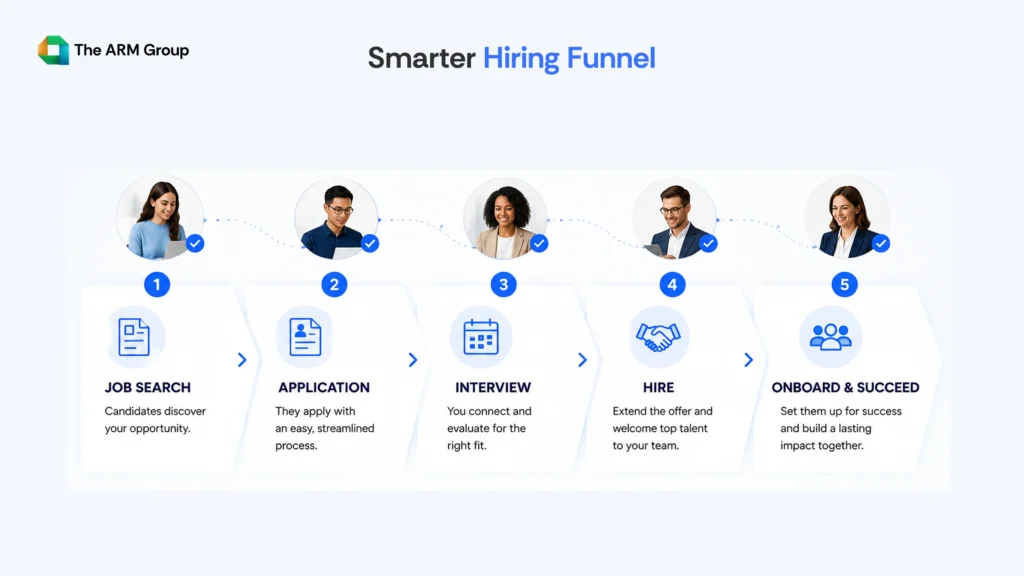
1. Write SEO-friendly job listings that candidates can actually find
A job post is not just an internal requirement; it is a search result waiting to happen. If your role is hard to discover online, you will miss qualified applicants.
To make your job listings easier to find:
- Use a clear job title that matches real search terms.
- Include key skills and responsibilities naturally in the description.
- Add location, work model, and seniority early in the post.
- Keep formatting clean with short paragraphs and simple headings.
Good job descriptions are both search-friendly and human-friendly. If someone cannot quickly understand the role, they will not apply.
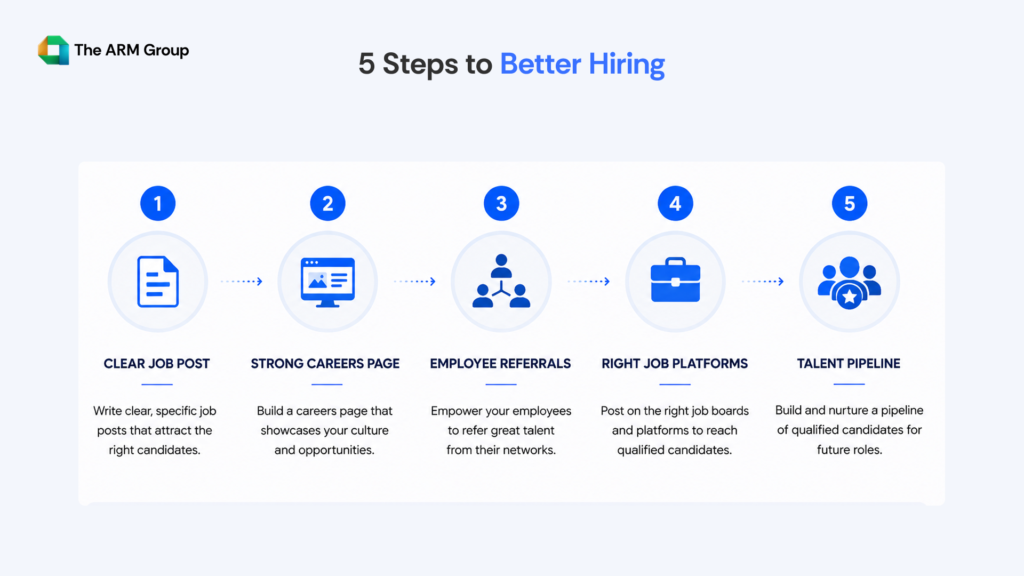
2. Improve your careers page and make the first impression count
Your company website is often the first place candidates go after seeing a job post. If the careers page is outdated, confusing, or empty, it creates doubt.
Strengthen your careers page by including:
- A short overview of what your company does.
- What it feels like to work there, including values and team culture.
- Clear job listings with easy application steps.
- A simple section that answers common candidate questions, such as the process timeline and interview stages.
A strong careers page builds trust and reduces drop-offs, especially for passive candidates who are deciding whether you are worth the effort.
3. Use your employees as super connectors
Some of the best candidates are not actively applying; they are already employed and open to the right opportunity. Your team can help you reach them.
Encourage your employees to share openings within their networks, not only on social media, but also in direct conversations. Even a warm introduction can lead to a high-quality shortlist.
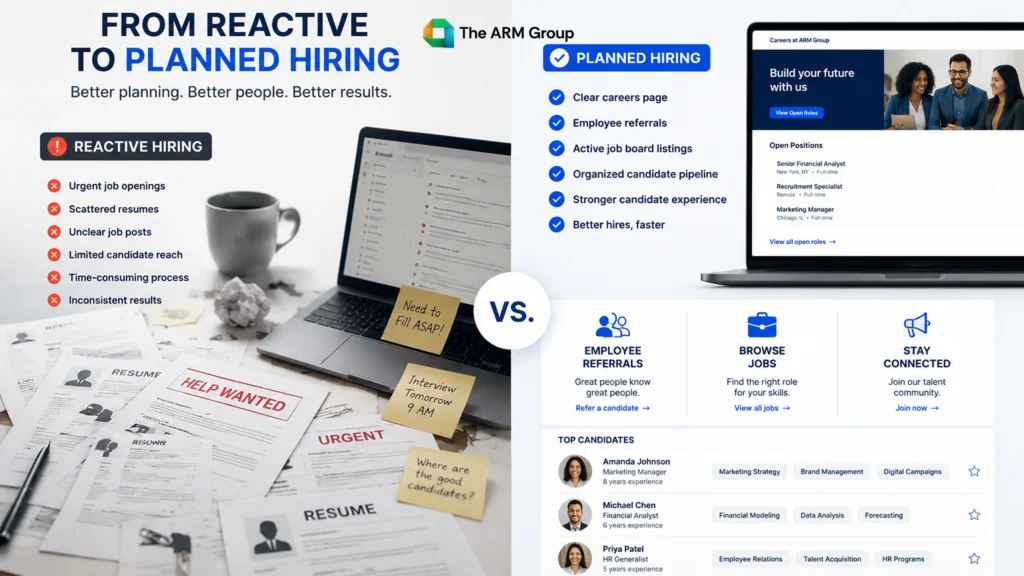
4. Build a referral program that people actually care about
Employee referrals tend to move faster and convert better, but only if the referral process is clear and the reward feels worth it.
A strong referral program usually includes:
- Simple rules and easy submission.
- Timely updates for the referring employee.
- Referral rewards that feel meaningful, not symbolic.
- Recognition, not just incentives, so participation stays consistent.
The key is consistency. One big referral push a year will not build a reliable pipeline.
5. Be clear about location, remote work, and flexibility
Candidates quickly filter jobs, and location details are among the first things they look for. If the job is on-site, hybrid, or remote, say so clearly. If there are travel expectations, shift schedules, or time zone requirements, include them upfront.
Clarity saves time. It reduces unqualified applications and improves your chances of attracting candidates who will accept an offer.
6. Expand your reach through the right job boards and platforms
A single platform rarely delivers the full range of candidates you need. Job boards and professional networks can help you widen the funnel, especially for high-volume roles or niche skill sets.
Use job platforms intentionally:
- Choose channels where your target talent actually spends time.
- Refresh listings regularly to keep them visible.
- Track which platforms bring quality applicants, not just volume.
- Consider paid placements when roles are urgent or hard to fill.
LinkedIn can be powerful for professional roles, but it should be part of a broader sourcing strategy, not the entire plan.
7. Benchmark compensation and communicate value clearly
Top talent compares offers quickly. If your compensation is not aligned with the market, you will lose candidates to faster, clearer offers.
Improve offer competitiveness by:
- Reviewing market pay ranges for similar roles.
- Communicating total compensation clearly, including benefits.
- Highlighting what makes the role valuable, such as growth, learning, stability, or flexible work options.
Compensation matters, but transparency matters too. Candidates want to know what they are walking into.
8. Build a talent pipeline before you urgently need one
Hiring becomes stressful when every role is urgent. A better approach is continuous recruiting, even when you are not actively hiring for every position.
You can build a healthier pipeline by:
- Keeping a shortlist of pre-screened candidates.
- Staying in touch with strong applicants who were not selected.
- Mapping future hiring needs based on team growth plans.
- Creating content that attracts talent over time, such as role spotlights or hiring guides.
A pipeline reduces time-to-hire and helps you avoid rushed decisions.
How the ARM Group can support smarter hiring
Strong recruitment is a mix of strategy, speed, and reliable execution. The ARM Group supports businesses with recruitment solutions designed to help teams hire better, faster, and with less operational strain.
Depending on what you are hiring for, you can align with the right service path.
- ARM Professional supports structured hiring across entry-level, mid-level, and management roles, including sourcing, screening, and interview coordination.
- ARM Elite supports leadership and executive hiring when confidentiality, precision, and fit are critical.
- ARM Flexi supports flexible staffing needs, including hybrid direct-hire, temp staffing, contractor hiring, and seasonal workforce scaling.
If your goal is to reduce hiring delays, improve candidate quality, or scale hiring without increasing internal workload, this is where a strong recruitment partner can make the process smoother.
Frequently asked questions
What makes a recruitment strategy effective today?
An effective strategy combines clear job messaging, strong visibility across the right channels, fast response times, and a consistent interview process. The best strategies also focus on the candidate experience, not just on sourcing volume.
How do I make a job post perform better?
Use a job title candidates recognize, clarify location and work model, list responsibilities in plain language, and include key skills naturally. Keep the post easy to scan, and remove unnecessary requirements that block qualified applicants.
Do employee referrals really work?
Yes, especially when the process is simple and the incentives are meaningful. Referrals often lead to higher-quality applicants because they come with context and trust.
Should we include salary in job postings?
In many markets, salary transparency improves application quality and reduces drop-offs later in the process. Even a range can help set expectations and attract candidates who are aligned.
How can we speed up hiring without lowering quality?
Move faster on communication, not judgment. Set internal timelines, reduce unnecessary interview rounds, and keep candidates informed at each step. Speed with clarity improves acceptance rates.
What is the best way to hire for remote or hybrid roles?
Be specific about time zones, work expectations, communication tools, and performance measures. Remote roles attract high volume, so clarity helps filter the right candidates early.
How do we build a talent pipeline when we are already busy?
Start small. Keep a shortlist of strong applicants, stay active on one or two key channels, and document recurring hiring needs. A recruitment partner can also help keep sourcing running without adding internal pressure.
When should we partner with a recruitment firm?
If roles are staying open too long, candidate quality is inconsistent, your team is stretched, or you are hiring for specialized or leadership positions, a recruitment partner can shorten the cycle and improve outcomes.
Conclusion
Recruitment does not need to feel like a constant scramble. When your job posts are discoverable, your careers page builds trust, your team is involved, and your process is clear, hiring becomes more predictable and more successful. Focus on the basics, execute them consistently, and build a pipeline before urgency takes over. If you want support improving speed, quality, and hiring structure, The ARM Group can help you turn recruitment into a system that delivers results.