
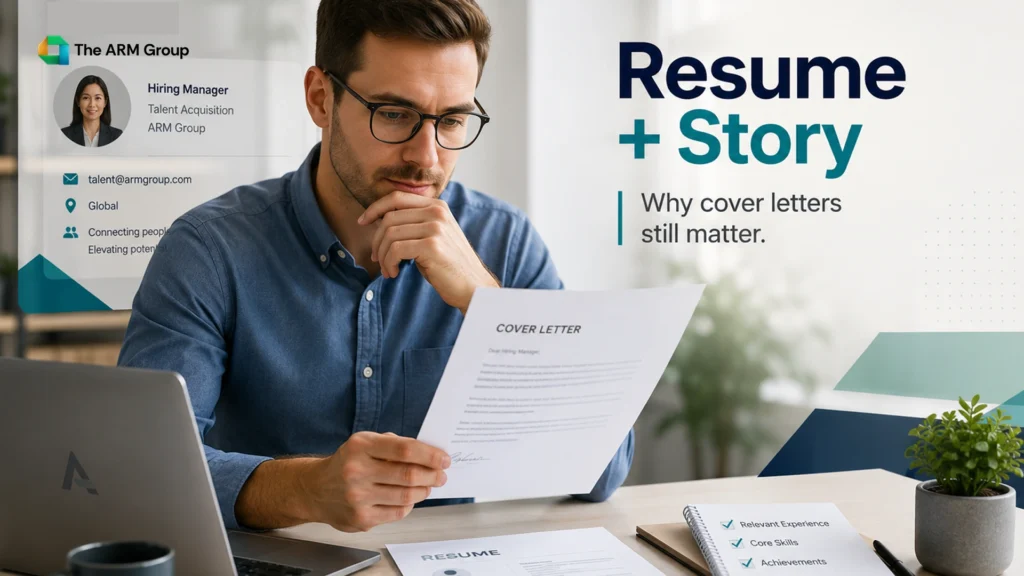
In a competitive job market, your resume shows what you have done. A cover letter explains why it matters for this role, at this company, right now. It is your chance to add context, show intent, and connect your experience to what the hiring team actually needs.
When you treat a cover letter like a copy-paste formality, it reads like one. When you use it to tell a clear, relevant story, it can be the difference between getting skimmed and getting shortlisted.
Why cover letters still matter
Hiring managers and recruiters review applications fast. A well-written cover letter helps them quickly understand three things.
- What role do you want, and why are you applying?
- How does your experience map to the job requirements?
- What makes you a strong fit beyond keywords and titles?
It also gives you a professional place to explain career changes, breaks, relocation, or anything your resume cannot say in one line.
Start with a targeted introduction
Begin with the role you are applying for and a focused reason you are reaching out. If you know the hiring manager’s name, use it. If you do not, keep it professional and simple.
A strong opening includes the position title, one line about why you are interested, and one line that signals your most relevant strength. Keep it short. Your goal is to earn the next few moments of attention.
Show your fit with proof, not adjectives
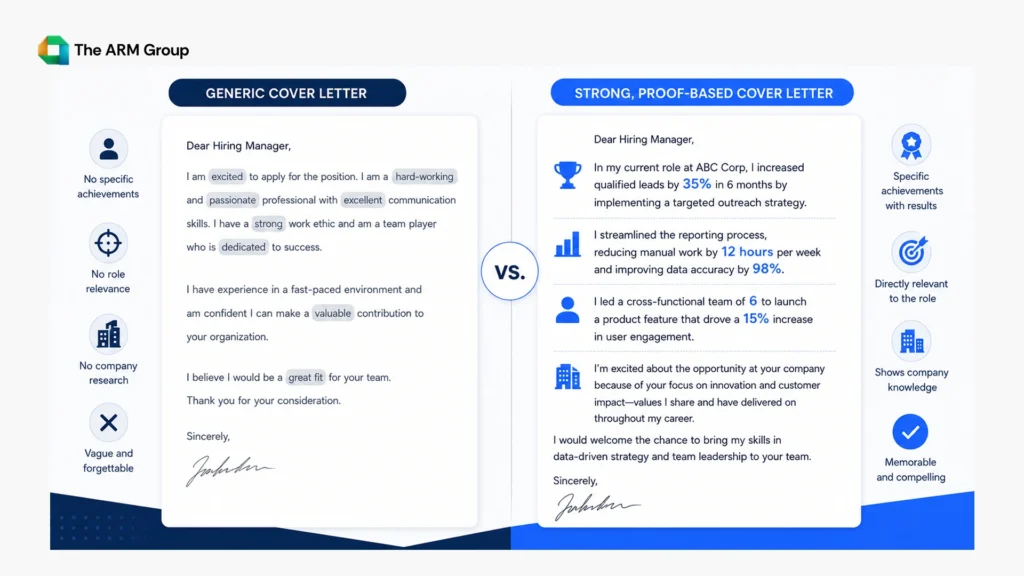
Avoid statements like “I am hardworking and passionate” without evidence. Instead, pick two or three requirements from the job description and support them with examples.
Share one achievement or responsibility that matches what the role demands, and explain the outcome. If you can include numbers, do it. Even small details like timelines, volume, or improvement percentages make your story feel more real and credible.
Make your interest specific, and make it believable
Hiring teams can tell when a cover letter could be sent to any company. Add one or two specific points that show you understand what the organization does and why you want to be part of it.
You can reference a service line, a market focus, a recent initiative, or a value that matches how you work. Keep it genuine and brief. One or two focused lines are enough.
Address gaps or transitions with clarity and confidence
If you have a career gap, a switch in industry, or a change in direction, a cover letter is the right place to provide context. Keep it simple.
State it briefly, then move forward by highlighting what you learned, what you have done recently, and why you are ready for the role now. Hiring teams are not looking for perfection. They are looking for clarity and readiness.
Keep the writing clean, professional, and easy to scan
A cover letter is also a writing sample. Make it effortless to read.
Aim for three to five short paragraphs, and keep it to one page. Use simple sentences, active voice, and role-relevant language. Avoid repeating your resume line by line. The cover letter should add meaning, not duplicate content.
Before sending, read it out loud once. If a sentence feels awkward to say, it will feel awkward to read.
Close with a clear next step
End with a confident closing that reinforces your fit and invites a conversation. Thank them for their time, restate your interest, and express openness to an interview or a short call.
A strong close is polite, direct, and professional.
A simple cover letter structure you can reuse
Use this structure as a base, then tailor it for every application.
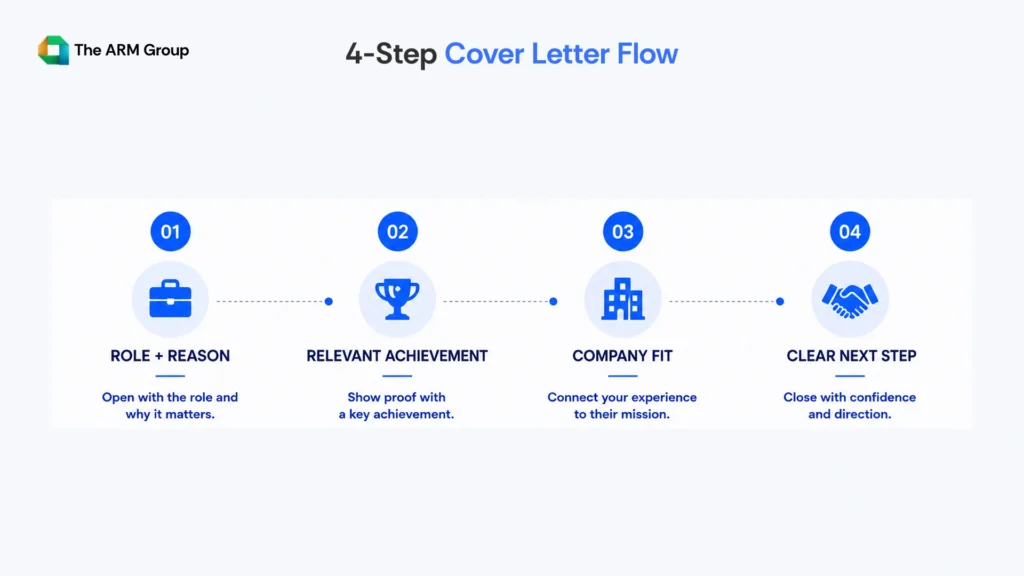
Paragraph 1: Role, reason for applying, and your strongest fit point.
Paragraph 2: One relevant achievement or responsibility, linked to the role requirements.
Paragraph 3: Another fit point, plus why this company or team interests you.
Paragraph 4: Short closing, interest in next steps, and thanks.
How The ARM Group supports your career story
A strong cover letter is not only about writing well. It is about positioning your experience in a way that hiring teams trust. The ARM Group helps candidates and companies connect with clarity, speed, and the right fit, so your story is supported by a hiring process that moves forward.
If you are a job seeker, you can explore ARM Professional for support that strengthens how you present yourself. This can include resume polishing, interview preparation, onboarding support, and guidance through mid-career transitions. It is especially useful when you are changing roles, entering a new industry, or returning to work after a gap.
If you are hiring, The ARM Group supports teams through focused recruitment solutions built around business needs. For leadership roles, ARM Elite supports global leadership search. For flexible hiring needs, ARM Flexi supports staffing models such as hybrid direct hire, temp staffing, and contractor hiring.
You can also explore current roles in the Jobs section and reach out via the Contact Us to discuss hiring requirements or career support.
Frequently asked questions
Do employers still read cover letters?
Many do, especially in roles involving communication, stakeholder management, or leadership. Even when a cover letter is optional, a well-written one can strengthen your application by adding context that your resume cannot.
How long should a cover letter be?
Keep it to one page. In most cases, three to five short paragraphs are enough. Hiring teams should be able to understand your fit in a quick scan.
Should I repeat my resume in the cover letter?
No. Your cover letter should complement your resume, not copy it. Use it to explain relevance, highlight one or two outcomes, and connect your experience to what the role needs.
What is the best structure for a cover letter?
A simple structure works best. Start with the role and why you are applying. Add one or two examples that match the job requirements. Mention why the company interests you. Close with a polite next step and thanks.
How do I write a cover letter when changing careers?
Focus on transferable skills and relevant outcomes. Explain the transition briefly, then show what you have done that proves you can perform in the new role, such as projects, certifications, volunteer work, or closely related responsibilities.
How do I explain an employment gap?
Keep it honest and short. Mention the reason at a high level if needed, then shift to what you learned or how you stayed active. The goal is to show readiness and confidence, not to overexplain.
Do I need a different cover letter for every job?
Yes, ideally. You can reuse a base structure, but tailor the opening, key examples, and the company-specific line for each role. That is what makes it feel relevant.
Can The ARM Group help me improve my cover letter and interview readiness?
Yes. Through ARM Professional, the ARM Group supports job seekers with resume polishing, interview preparation, onboarding support, and career guidance to help you present your story clearly.
Where can I see current job openings from The ARM Group?
You can explore current openings through the Jobs section on The ARM Group website. This is the best place to find updated roles and apply directly.
Conclusion
A cover letter is a simple tool, but when it is written with intention, it makes your application easier to trust. Focus on relevance, use real examples, and keep your message clear and professional. When your story is structured well, hiring teams can quickly see where you fit, what you bring, and why you are worth meeting. If you want support shaping that story, The ARM Group can help you present your strengths with clarity and connect you to the right opportunities.

Krithika P
Krithika P is an Assistant Director of Recruitment at The ARM Group, bringing seven years of experience across the end-to-end hiring process — from sourcing and screening to strategic talent planning, candidate analysis, and negotiation. Her expertise spans international recruitment, product hiring, and scaling teams for everyone from early-stage startups to established enterprises, filling roles from Associate through Director level. Known for strong stakeholder management and a focus on employee engagement, she is passionate about building high-performing teams and delivering recruitment solutions that drive measurable business success.