


Let’s face it—recruiting isn’t what it used to be.
You post the job. You get the applications. You screen the resumes. You think you’ve found “the one”…
And then—they ghost you. Or worse, they decline your offer and join your competitor. Sound familiar?
The truth is, top-tier candidates are saying “no” more often—not because they’re not interested, but because your hiring process might be unintentionally pushing them away.
Here’s what might be happening behind the scenes—and how to fix it.
1. Your Process Takes Too Long
Speed matters—especially when your ideal candidate is already fielding multiple offers. If your process stretches into weeks with radio silence between steps, you’re not just testing patience—you’re losing talent.
Quick Fix:
Set internal deadlines for each hiring stage. Use automation tools to keep candidates informed. If a delay is unavoidable, communicate it early.
📌 Pro tip: The best candidates are off the market in 10 days or less.
2. You’re Not Selling the Role—You’re Just Interviewing
Too many hiring managers treat interviews like interrogations. But interviews should be a two-way street. Remember: top talent is interviewing you too.
Quick Fix:
Sell the opportunity. Talk about growth, team culture, impact. Let candidates meet future colleagues or tour the workspace (virtually, if needed). Make them feel what it’s like to work with you.
🧠 Think of your job description and interviews like marketing—because they are.
Top Reasons Candidates Decline Job Offers
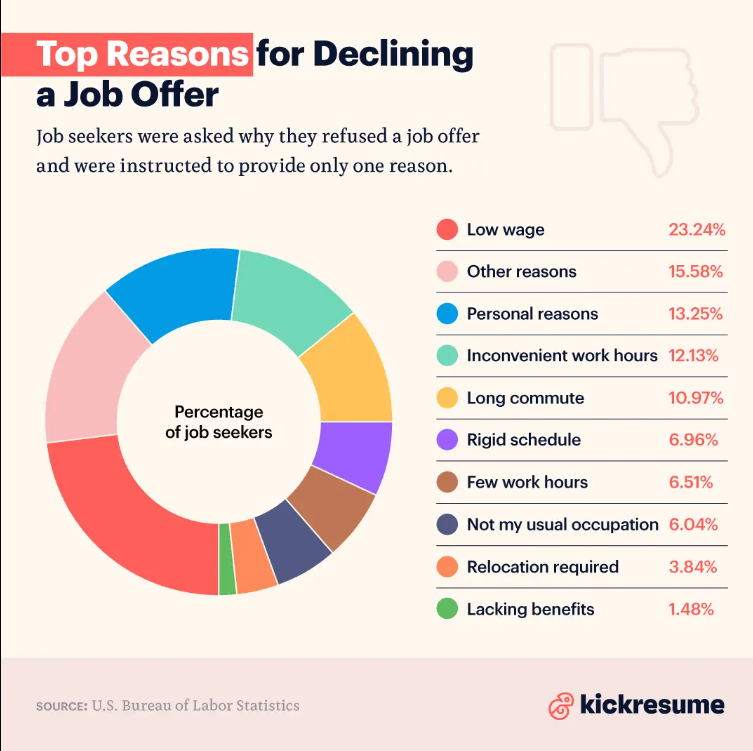
According to a study by Kickresume, candidates turn down job offers for various reasons beyond just salary. Factors include inconvenient working hours (12.13%), long commute (10.97%), and inflexible schedules (6.96%) .
3. Feedback Blackout = Confidence Drop
Here’s the reality: silence equals rejection in a candidate’s mind. When you go dark between rounds, you’re unintentionally signaling disinterest—even if it’s not true.
Quick Fix:
Send a short check-in email or message every few days. Even a simple “We’re still finalizing next steps—thanks for your patience!” keeps them engaged and reassured.
💡 Feedback is currency. Don’t make them bankrupt.
4. Compensation Conversations Are Vague or Too Late

Let’s be honest—if compensation is going to be a dealbreaker, why wait until the end to talk about it? You’re wasting everyone’s time.
Quick Fix:
Bring up salary expectations early in the process. Be transparent about ranges. Avoid vague phrases like “competitive compensation” unless you can back it up.
💬 “We’d rather lose you now than disappoint you later” isn’t a bad mantra to follow.
5. Your Brand Doesn’t Match the Candidate Experience

Candidates today will Google you, stalk your Glassdoor, and scroll your LinkedIn. If your public brand says “collaborative and innovative” but your interview process is cold and chaotic, they’ll sense the disconnect.
Quick Fix:
Make sure your hiring process reflects your company values. Ask yourself: “Is this the experience we would want to go through?”
📱 And yes—update that ‘Careers’ page already. It still has stock photos from 2012.
Final Thought: The Best Candidates Aren’t Desperate—They’re Deciding
Recruiting great talent in today’s market isn’t about filtering out the bad—it’s about attracting and convincing the best. And that means every part of your process needs to feel intentional, respectful, and human.
So if great candidates keep saying no… it may be time to say yes to fixing the gaps.
✍️ Written by The ARM Group — helping companies hire smarter, faster, and better.